




Do True Sine Inverters have battery charging function?
 May 30, 2025|
 True sine inverters, also known as pure sine wave inverters, are widely used in various off - grid energy systems and applications where a clean and stable AC power supply is required. One question that often pops up among potential buyers is, "Do true sine inverters have battery charging function?" Let's dig into this topic and clear up any confusion.
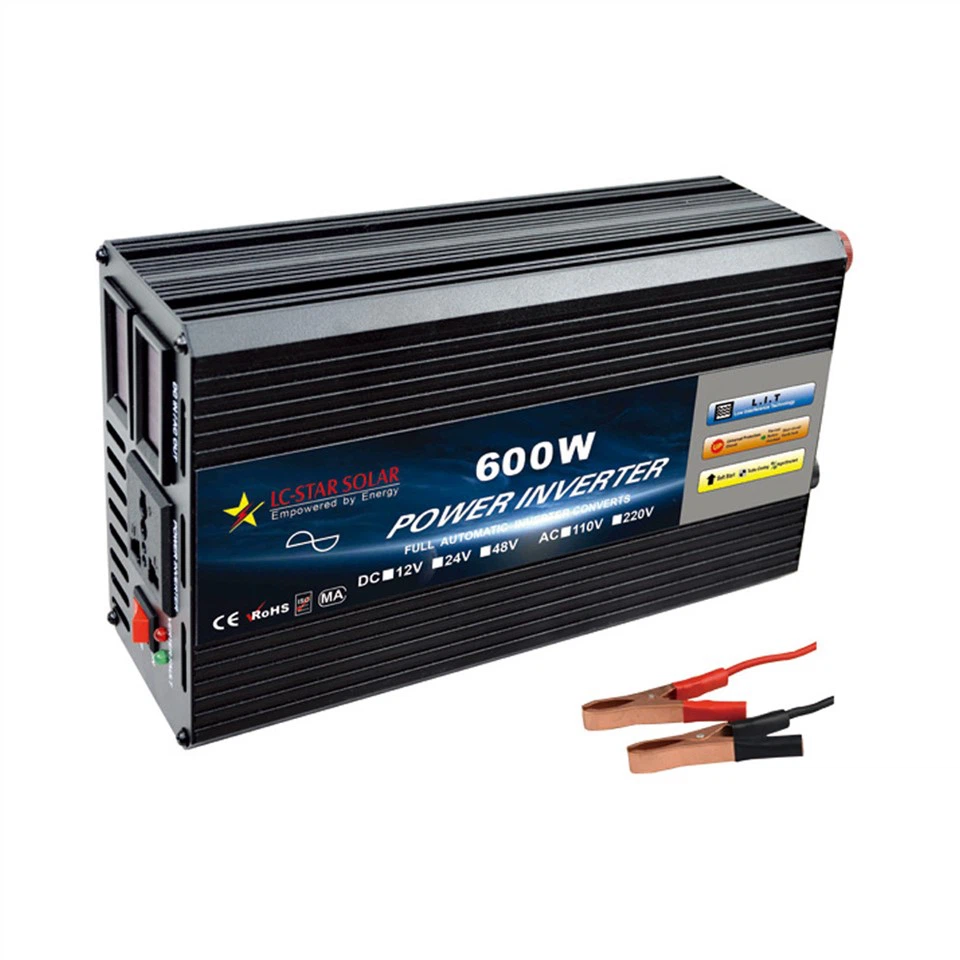
First off, let's understand what a true sine inverter is. A true sine inverter is basically a High Efficiency Pure Sine Wave Inverter that takes DC power (usually from batteries) and converts it into AC power. The output AC power has a waveform that closely resembles the one from the utility grid. This pure sine wave output is crucial for sensitive electronic devices like laptops, TVs, and other gadgets. These devices can malfunction or have a shorter lifespan if they're fed with non - pure sine wave power.
Now, getting back to the main question: do they have a battery - charging function? Well, the answer isn't a simple yes or no. There are two main types of true sine inverters on the market in terms of battery charging:
Inverters without Battery Charging Function
Some true sine inverters are designed purely for the job of converting DC power from a battery into AC power. These DC/AC Converter with A Stable Pure Sine Wave don't have any built - in battery charging capabilities. Their main goal is to provide a reliable source of pure sine wave AC power for your appliances. If you have one of these inverters, you'll need a separate battery charger to charge your batteries.
For example, in a simple off - grid solar system, you might have a solar panel that generates DC power. This DC power can be stored in a battery. A true sine inverter without a charging function will only take the DC power from the battery and turn it into AC power for your devices. To recharge the battery when it runs low, you'd have to use a dedicated solar charge controller (which acts as a battery charger) between the solar panel and the battery.
Inverters with Battery Charging Function
On the other hand, there are true sine inverters that come with a built - in battery charging feature. These Pure Sine Wave Power Inverters are a great all - in - one solution for small to medium - sized off - grid systems. They can perform two functions: convert DC to AC power for your appliances and charge the battery when connected to an appropriate power source.
Let's say you have an off - grid cabin with solar panels and a battery bank. A true sine inverter with a charging function can take the DC power from the solar panels, charge the battery, and at the same time, invert the DC power from the battery into AC power for your lights, fridge, or other electrical devices in the cabin.
How the Charging Function Works
When the inverter is connected to a suitable power source (like a solar panel or a generator), the charging circuit inside the inverter starts working. It first checks the condition of the battery. If the battery is fully charged, the charging process stops to prevent over - charging, which can damage the battery. If the battery is low on charge, the inverter will regulate the charging current and voltage to ensure a safe and efficient charging process.
The charging process usually goes through several stages. First, the bulk stage where a high current is supplied to quickly charge the battery up to a certain level. Then, the absorption stage where the voltage is held constant while the charging current gradually decreases. Finally, the float stage where a low - level charge is maintained to keep the battery fully charged without over - charging.
Advantages of Inverters with Battery Charging Function
- Space and Cost Saving: You don't need to buy a separate battery charger, which saves money on the initial purchase. Also, it takes up less space in your off - grid setup.
- Convenience: One device can handle both power conversion and battery charging, making the system easier to install and manage. You don't have to worry about coordinating the operations of two separate devices.
Disadvantages of Inverters with Battery Charging Function
- Limited Charging Capacity: Inverters with built - in charging functions might have limited charging current and capacity compared to dedicated battery chargers. So, it might take longer to charge large battery banks.
- Repair Complexity: If something goes wrong with the charging function, it can be more difficult and expensive to repair compared to a standalone battery charger.
When you're in the market for a true sine inverter, you have to consider your specific needs. If you already have a high - quality battery charger and just need a reliable power inverter for your sensitive electronics, an inverter without a charging function might be the right choice. But if you're setting up a new off - grid system from scratch and want a simple, all - in - one solution, an inverter with a built - in battery charging function could work wonders for you.
We're a supplier of True Sine Inverters. We offer a wide range of true sine inverters, both with and without battery charging functions. Whether you're a DIY enthusiast building a small off - grid setup in your backyard or a professional installer working on a large - scale project, we've got the right inverter for you.
If you're interested in learning more about our products or discussing which inverter would be best for your specific application, feel free to reach out. We're here to help you make an informed decision and get the most out of your off - grid energy system.

References
- Smith, J. (2022). Off - Grid Renewable Energy Systems Handbook. Energy Publishing Co.
- Brown, A. (2021). Understanding Power Inverters in Solar Systems. Solar Journal Publications.