





Which Inverter Is Best For Home Use?
 Apr 18, 2025|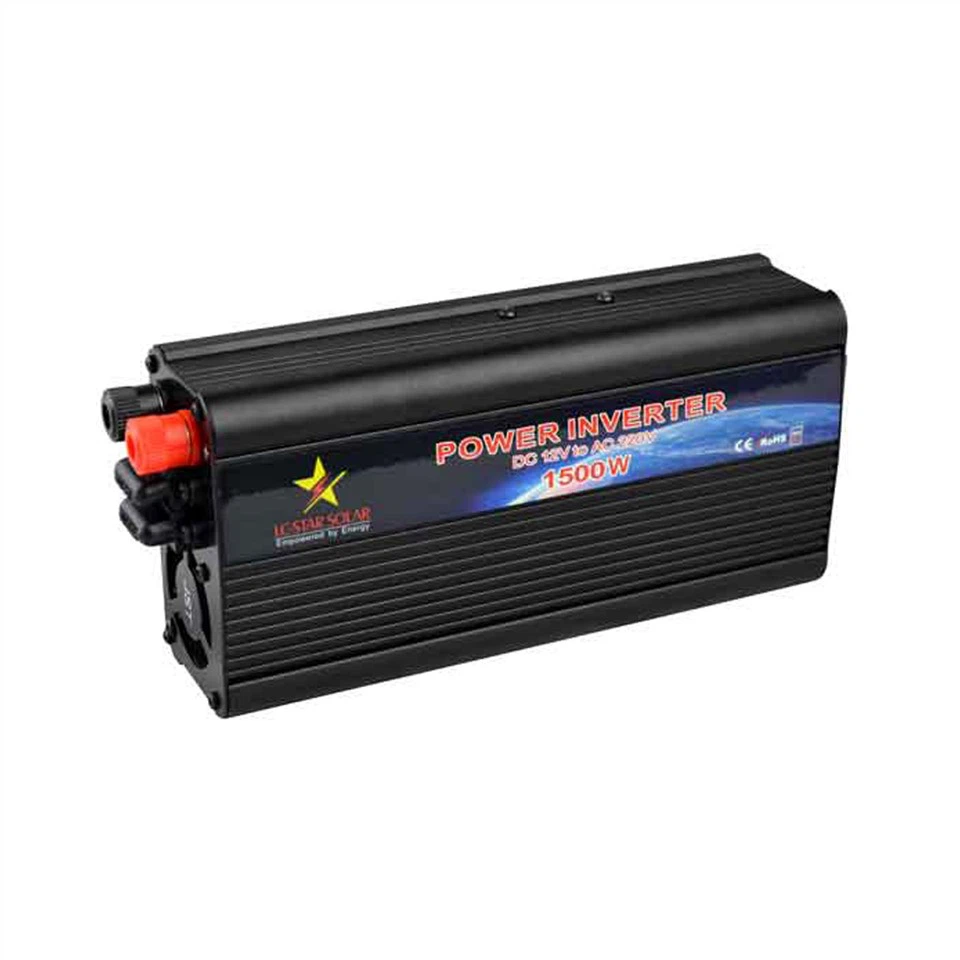
As people's awareness of the independence of home energy systems and energy conservation and environmental protection increases, more and more families are beginning to pay attention to how to effectively use backup power systems in daily life. Inverter, as the core equipment in solar energy systems and backup power supplies, plays an increasingly important role in modern families. So, Which inverter is best for home use? This article will explore in depth from multiple dimensions.
Inverter is a device that converts direct current (DC) into alternating current (AC). In home scenarios, most electrical appliances such as refrigerators, TVs, washing machines, air conditioners, etc. use AC power, so if they are powered by solar energy systems, batteries or car power supplies, they must be converted into usable AC power through inverters.
• In the following home scenarios, inverters play a vital role:
Solar energy system: Solar panels generate DC power, which needs to be converted into AC power through inverters for home use or access to the grid.
Power outage backup power supply: When the mains power is interrupted, the inverter can immediately switch to battery power to ensure the continuous operation of lighting and necessary home appliances.
Energy saving and environmental protection requirements: By configuring the solar inverter system, households can partially or completely achieve energy self-sufficiency, reduce dependence on traditional power grids, and help reduce carbon footprint.
Main types of home inverters
Pure Sine Wave Inverter
The current waveform output by the pure sine wave inverter is almost the same as the mains power, with strong compatibility and can stably drive various home appliances. It is especially suitable for devices with high power quality requirements such as TVs, refrigerators, and air conditioners.
Advantages: Best compatibility, low noise, stable equipment operation, and not easy to damage home appliances
Modified Sine Wave Inverter
This type of inverter outputs a step wave similar to a sine wave, which can support the operation of most home appliances, but the performance is not ideal when driving inductive loads.
Advantages: Low cost, suitable for families with limited budgets, can meet basic home lighting and some home appliance needs
Square Wave Inverter
The most basic type of inverter, the output waveform is a simple square wave, only suitable for devices with resistive loads, such as light bulbs, electric heaters, etc.
Advantages: Lowest cost.

To choose the most suitable inverter, the following key factors need to be considered:
Power demand
The inverter power required by the family should be slightly higher than the total power of commonly used home appliances. For example:
The total power of lighting, TV, and fan is about 800W.
The total power of refrigerators, washing machines, microwave ovens, etc. is about 1500W.
It is recommended to choose an inverter with a capacity of 2kW-3kW to ensure stability and scalability.
Input and output voltage matching
The common inverter input voltage is 12V or 24V, and the output is 220V AC. It is necessary to ensure that it matches the home battery system and power grid standards.
Compatibility with backup battery system
The inverter needs to support compatible docking with common types such as lead-acid batteries and lithium batteries, and have intelligent charge and discharge management functions.
A high-quality inverter should have the following safety protection functions: Overload protection, short circuit protection, overheating protection, anti-reverse connection protection, and a good heat dissipation system (air cooling or silent fan) IV. Which inverter is recommended for home solar energy system?
On-Grid Inverter
The electric energy converted by solar energy is directly connected to the grid. It is suitable for families with large power consumption and installed in urban areas with stable power. It cannot be used during power outages.
Off-Grid Inverter
The electric energy is stored in the battery and supplied by the inverter. It is suitable for rural areas or areas with frequent power outages and can operate completely independently.
Hybrid Inverter
Combining grid-connected and off-grid functions, it supports triple energy switching between grid, solar energy and batteries. It is the best choice for current home photovoltaic systems.
• Recommendations for different apartment types:
Small apartment (apartment): Small power grid-connected or hybrid inverter is recommended.
Urban villa: 5kW and above hybrid inverter with energy storage system is recommended.
Rural self-built house: Off-grid or hybrid inverter is recommended, with strong independence.
Choosing an inverter suitable for the family can not only ensure stable power consumption, but also improve the overall efficiency of the home energy system. Whether it is used for solar power generation system, power outage backup, or daily energy saving and consumption reduction, the reasonable configuration of the inverter can make home life more secure, environmentally friendly and efficient.