Inverter

Your professional Inverter supplier


The originator of longchi technology has rooted in the field of solar energy as early as in 1990s. Longchi factory was founded in 2011, occupies 56667 square meter and is located at the center of the yangtze river delta-huzhou,zhejiang.


Why Choose US

Quality Control

With strong R&D, reliable quality, and strict supply chain management, Longchi products have been testified for peak performance and long life.

Delivery Speed

Huge production capacity to ensure in time delivery. Complete packaging to ensure products quality, and transport to the destination in the first time.

Quality Service

Longchi is excel at tackling complex challenges and delivering high-quality solutions to help our partners achieve a resplendent future.

First 12 Last 1/2
Types of Inverter
Pure Sine Wave Power Inverters
High Efficiency Pure Sine Wave Inverter
5000W Car Power Inverter
Pure Sine Wave Power Inverters

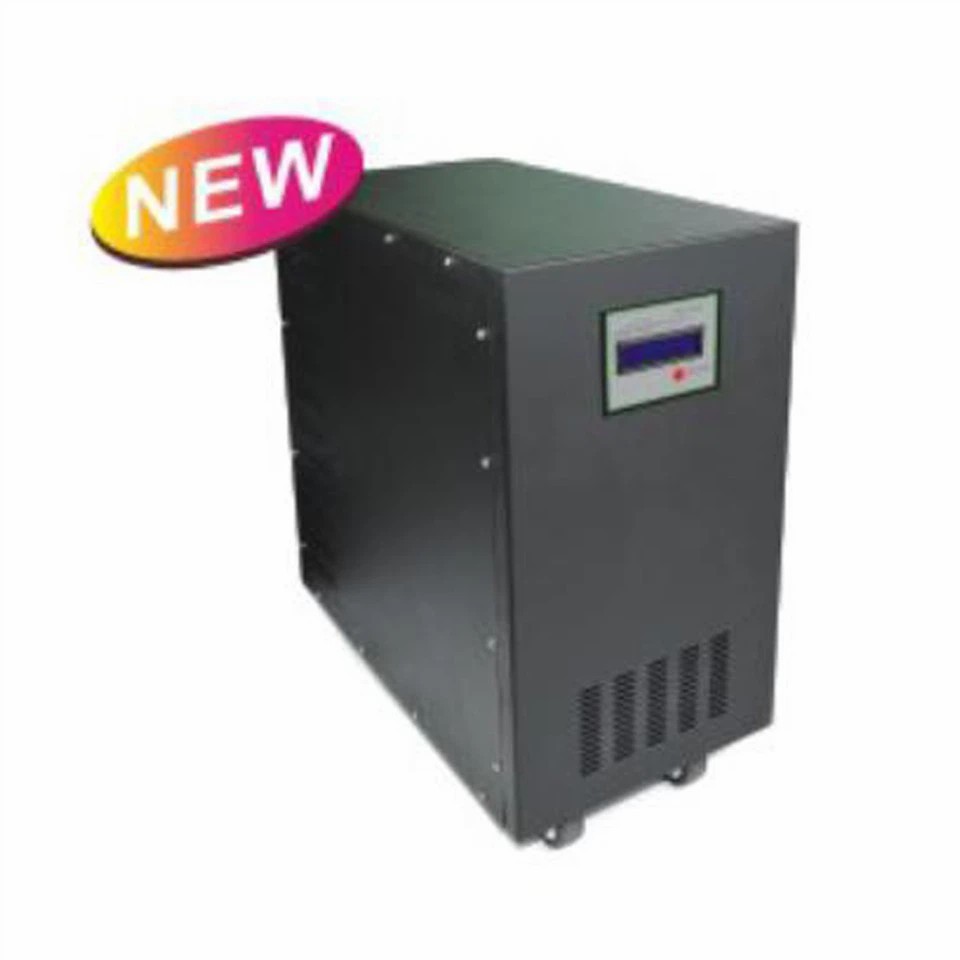
Hybrid Inverter with Solar Battery Charging
Full digital voltage and current double closed loop control with advanced SPWM technology ensures precise and stable output of pure sine wave. This technology also helps in achieving high efficiency and low harmonic distortion.


Pure Sine Wave Power Inverters
The two output modes, mains bypass and inverter output, ensure uninterrupted power supply to connected devices. This technology helps in smooth transition between mains power supply and inverter output in case of power failure.


Top-quality Pure Sine Power Inverters
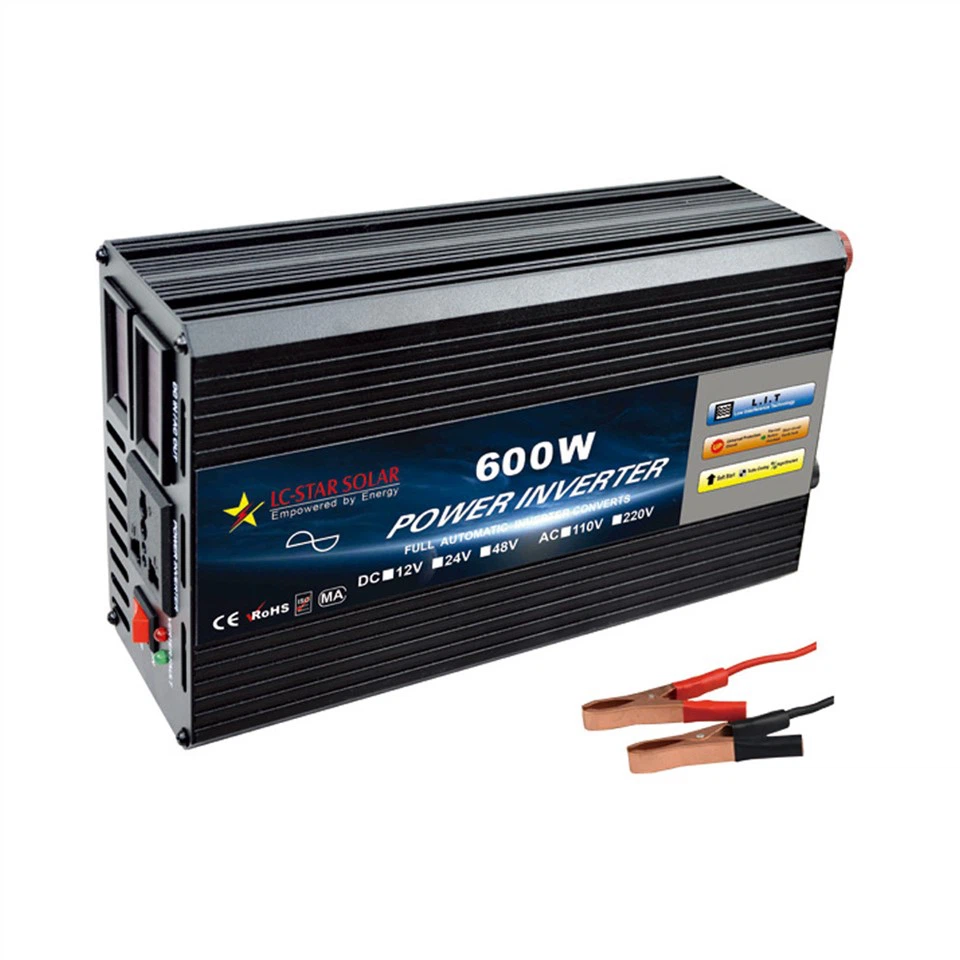
Puresine wave power inverters are a must-have for anyone who needs to convert DC power into AC power. Whether you are going on vacation, a work trip, or camping, these power inverters are the ideal choice because of their compact size, light weight, and high efficiency.


Off Grid Low Frequency Solar Inverter
Can provide sensibility load and other kinds of loads, such as electric fanrefrigeratorair conditioner electromotor and computer and so on.


Industrial Frequency Inverter
Externally located re-settable circuit breakers: A safety feature that allows you to quickly shut off power to the inverter in case of an emergency.


True Sine Inverters
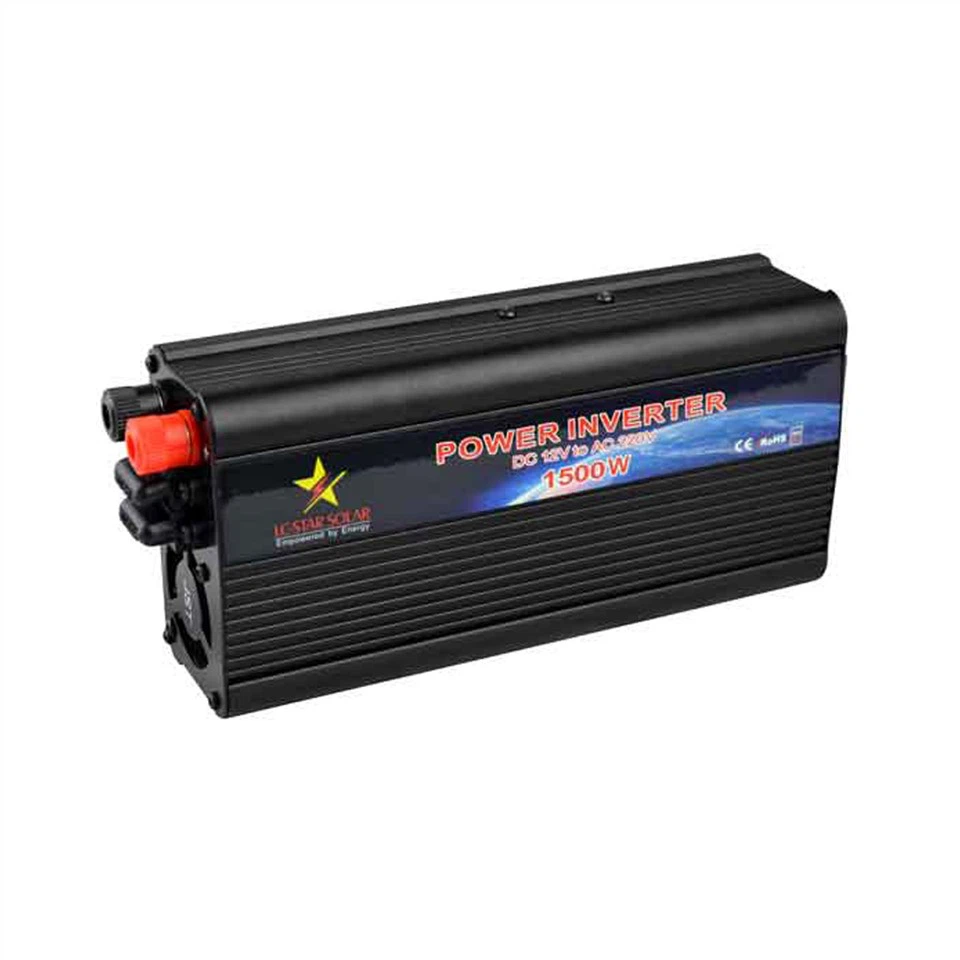
It is a device capable of providing 1500 watts of power with modified sine wave technology. It is designed to withstand extreme temperatures, reverse polarity, and over-voltage while also featuring a low voltage alarm and cut-off system. This product also includes an industry-leading 2-year warranty.


Advantages of Inverter
 
01/

Versatility and Portability
One of the key advantages of power inverters lies in their versatility and portability. These devices come in various sizes and types, ranging from small, compact inverters for personal use to larger, industrial-grade models.

02/

Emergency Power Backup
In times of power outages or natural disasters, power inverters prove to be invaluable assets. They enable homeowners to continue using essential appliances, such as lights, refrigerators, and communication devices, by drawing power from backup battery systems.

03/

Renewable Energy Integration
With the growing emphasis on renewable energy sources, power inverters have become essential components in solar and wind energy systems. Solar panels generate DC electricity, which must be converted into AC to be used in homes and businesses.

04/

Efficient Energy Conversion
Modern power inverters are designed with advanced technology that ensures high levels of energy efficiency during the conversion process. This efficiency translates to minimal energy wastage, making them environmentally friendly and cost-effective solutions.


Applications of Inverter


An inverter is mostly used in uninterrupted power supplies (UPS). The function of the power inverter circuit in UPS is to convert DC power to AC power at the required voltage level.


In industrial and commercial applications (for example- AC adjustable speed drive i.e. ASD, induction heating, etc.), the inverter is used for controlling the AC motor drive's input voltage.


In domestic appliances (like as refrigerators, air conditioning, etc), the inverter is very essential for controlling the speed of the compressor and regulating the required power.


The inverter is primarily used in solar energy systems and wind turbine systems.


In electric aircraft and electric vehicles (EV), the power inverter is the most important device for power conversion and regulation.
Also, it is used in high-voltage DC (HVDC) transmission.


This power device is used in the electroshock weapons (like stun guns, tasers, etc). 


Technical Specifications
 

INVERTER

DC Input voltage range (1)

38 – 62V

AC Output (2)

Output voltage: 230 Vac ± 2%

Frequency: 50 Hz ± 0,1% (1)

Maximum continuous inverter current : 25 Aac

Continuous output power at 25°C

Increases linearly from 4800 W at 46 VDC to 5300 W at 52 VDC

Continuous output power at 40°C

4500W

Continuous output power at 65°C

3000W

Peak power (3)

9 kW for 3 seconds

7 kW for 4 minutes

Short-circuit output current

45 A

Max. AC output overcurrent protection

30 A

Maximum efficiency

96.5% at 1 kW load

94% at 5 kW load

Zero load power

20W

Low battery shutdown

37.2 V (adjustable)

Low battery restart

43.6 V (adjustable)

CHARGER

Programmable charger voltage range (5)

36 - 60 V

Charge voltage 'absorption'

default: 57.6 V (adjustable)

Charge voltage 'float'

default: 55.2 V (adjustable)

Maximum charge current from AC (6)

88 A @ 57.6V

Battery temperature sensor

Included

Battery voltage sense

Yes

GENERAL

Parallel and 3-phase operation

12 parallel units supported, 3 phase supports 4 units per phase

Programmable relay (8)

Yes

Protection (9)

a - f

Data Communications (10)

VE.Direct port, VE.Can port & Bluetooth

Bluetooth frequency

2402 - 2480 Mhz

Bluetooth power

4 dBm

General purpose analog/digital in port

Yes, 2x

Remote on-off

Yes

Operating temperature range

-40 to +65°C (fan assisted cooling)

Maximum altitude

2000 m

Humidity (non-condensing)

max 95%


ENCLOSURE

Material & Color

steel, blue RAL 5012

Protection category

IP21

Protective Class: I

Battery-connection

M8 bolts


230 V AC-connection

Screw terminals 10 mm² (6 AWG)

Weight

11 kg

Dimensions (hxwxd)

425 x 440 x 125 mm

STANDARDS

Safety

EN-IEC 60335-1, EN-IEC 60335-2-29, EN-IEC 62109-1, EN-IEC 62109-2

Emission, Immunity

EN 55014-1, EN 55014-2 EN-IEC 61000-3-2, EN-IEC 61000-3-3

IEC 61000-6-1, IEC 61000-6-2, IEC 61000-6-3

Pollution Degree 2

Overvoltage Category

Battery: OVC I

PV port: OVC II

AC in / AC out: OVC III

Minimum start-up voltage is 41 VDC. Over-voltage disconnect: 65,5 V.


Can be adjusted to 240VAC and 60 Hz


Peak power capacity and duration depends on start temperature of heatsink. Mentioned times are with cold unit.


The Charger set points (float & absorption) can be set to max 60 V. The output voltage at the charger terminals can be higher due to compensation for temperature & voltage drop over the battery cables. The maximum output current is reduced on a linear basis from full current at 60 V to 5A at 62 V. The equalization voltage can be set to max 62V, the equalization current percentage can be set to max 6%.


The maximum charge current from AC sources depends on input voltage and battery current. At 230V input and 57.6V battery voltage, and 25C ambient, the maximum charge current is 88A. See manual, limitations section, for further details.


Programmable relay which can be set for general alarm, DC under voltage or genset start/stop function. DC rating: 4 A up to 35 VDC and 1 A up to 70 VDC


Protection key: a) output short circuit b) overload c) battery voltage too high d) battery voltage too low e) temperature too high f) 230 VAC on inverter output g) solar earth leakage.


Not currently compatible with VE.Smart Networks. Connection to a GX device must be made via the VE.Can interface. The VE.Direct interface is for connection to the GlobalLink 520.


Major Components of an Inverter
 

Microcontroller
Microcontroller is the main and integral part of an inverter. The main working of microcontroller is to control the switching of signals according to the requirements.
A single microcontroller can perform multiple functions (e.g.) generating PWM for switching, controlling the protection systems etc.


Bipolar junction transistors (BJTs)
BJT or a bipolar junction transistor is a three layered device which is capable of controlling the current flow.
In a BJT, a small current at the input of the device can control larger currents at the output. Thus, BJTs can amplify currents.
They can be used as a relay driver, as a switch, as a constant current source, as an amplifier (etc.).


H-Bridge
H -bridge is a topology in which four switching devices BJTs, MOSFETs or IGBTs are integrated together in a single circuit.
The name H-Bridge is given to it because of the typical arrangement of this circuit.
Mainly used switching devices in the H-bridge circuits are BJTs, MOSFETs or IGBTs.


MOSFETs
The Metal-Oxide-Semiconductor-Field-Effect-Transistor (MOSFET) is a voltage controlled device and requires a very small input current.
It is mainly used for switching of electronic signals as its switching speed is very high.
It is the most commonly used FET in low-power high-frequency circuits.


Filters
At times it is desirable to have circuits capable of selectively filtering one frequency or range of frequencies out of a mix of different frequencies in a circuit.
A circuit designed to perform this frequency selection is called a filter circuit.


Certificate
 
productcate-1-1
productcate-1-1
productcate-1-1
productcate-1-1


FAQ

Q: What is the purpose of an inverter?

A: The function of an inverter is to convert Direct Current (DC) into Alternating Current (AC). DC is the current produced from the battery or solar panel. The DC cannot be carried to long distances this is one of the reasons to use AC current to run the main electricity supply.

Q: What is the point of an inverter?

A: An inverter converts the DC electricity from sources such as batteries or fuel cells to AC electricity. The electricity can be at any required voltage; in particular it can operate AC equipment designed for mains operation, or rectified to produce DC at any desired voltage.

Q: What should you not plug into an inverter?

A: Certain chargers, particularly for battery-operated portable devices that lack a separate transformer or charger, can be damaged if plugged into the inverter. These include flashlights, cordless razors, and electric toothbrushes.

Q: What are inverters made of?

A: An inverter consists of three elements: a converter circuit that converts AC current into DC current, a capacitor, and a power inverter circuit.

Q: What materials are needed for inverter?

A: Transformer= 9- 0- 9 Volts / 5 Amps. Automobile battery= 12 Volts/ 10AH. Aluminium heat sink= cut as per the required size. Ventilated metal cabinet= as per the size of the whole assembly.

Q: Which metal is used in inverter?

A: Aluminum transformers are popular for inverters due to their cost-effectiveness and long life. However, in Digital Inverters/Square wave Inverters, copper transformers might be a better option.

We're professional inverter manufacturers and suppliers in China. If you're going to wholesale high quality [[productname]] made in China, welcome to get more information from our factory. Good service and competitive price are available.

inverter supplier, inverter diode

(0/10)

clearall